
"How would a baby god of the sea support a decaying reef?"
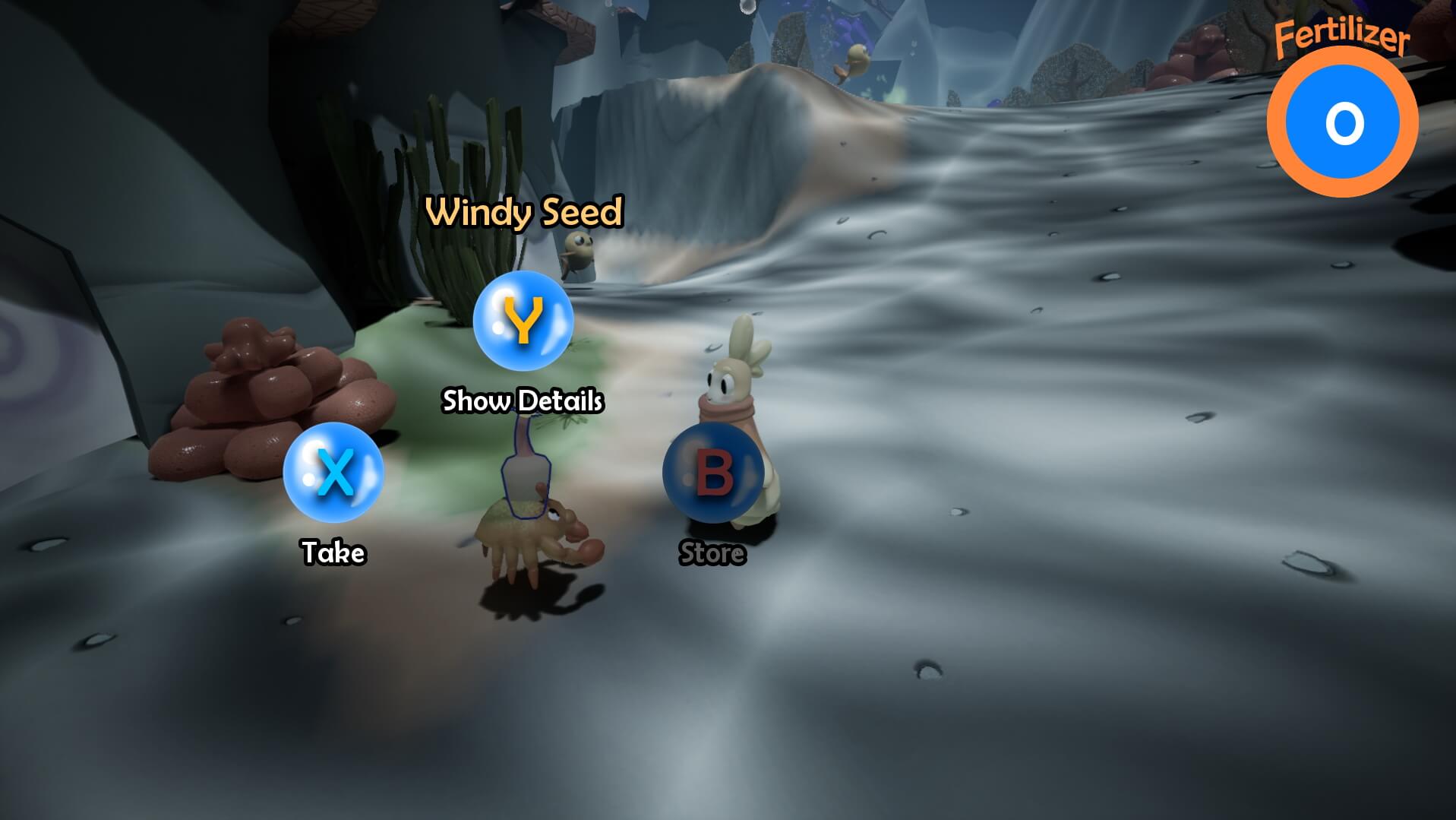
The player, as Mu, meets the needs of the reef's fishy denizens by using plants and their fruits to solve puzzles and traverse the world.
Competencies
- Used HackNPlan's Design Model to document systems and objects, outlining gameplay needs for the entire team.
- Prototyped plants and fruits, which have modular interactions with each other and characters to create emergent gameplay.
- Tested usability to inform input changes for object interaction and character movement.
Findings
- Refined, specific processes and guides kept our team working cohesively and able to integrate various types of content.
- We spent too much time developing lots of interconnected pieces and systems, leaving little development time to get gameplay mileage out of them.
- More frequent and focused playtesting would've removed much of the guesswork I did as the creative director.
Retention Design
I created this document for a class in retention design, focusing on how the game will keep players engaged. Some of these designs were implemented by our team, others are possible expansions the team could make to engage a wider audience and fund the game's development, were it a commercial title. This document details:
- Core game loop
- Progression through planting and exploring
- Economic and social progression in game
- Studio costs for commercial development
- Monetization strategies and implementation
Context
This game was created over 2 semesters at DigiPen Institute of Technology for our GAM300 (junior-level) interdisciplinary game project course. We were a self-assembled team of students including designers, programmers, producers, and artists; visual and audio. Our professors acted like publishers, guiding us lightly through a full development cycle of production, pre, and post, to develop our own game for PC.